
Joint Support
Protect, lubricate, and strengthen joints, tendons, and connective tissue with compounds that promote collagen synthesis, reduce inflammation, and improve synovial fluid quality. A must-have for heavy lifters, aging athletes, or anyone dealing with wear-and-tear — train hard today while safeguarding your joints for tomorrow.
Joint Support Compounds: Healing, Relief, and Protection for Serious Lifters
Ask any experienced lifter what’s slowed their progress most and the answer is rarely genetics or diet — it’s joints. Tendons, ligaments, and cartilage take a beating from years of heavy compound movements, and they recover far slower than muscle tissue. Joint pain isn’t just uncomfortable; it’s the number one training-limiting factor for athletes past the beginner stage. When your shoulders, knees, or elbows start dictating what you can and can’t do in the gym, it’s time to address the problem directly.
The joint support compounds available today fall into two distinct categories: healing peptides that repair damaged tissue at the cellular level, and relief compounds that provide lubrication, reduce inflammation, and allow you to train through existing issues while recovery happens. The best protocols use both.
BPC-157 and TB-500 — The Healing Peptides
If you’ve spent any time researching joint support peptides in Canada, you’ve encountered BPC-157 and TB-500. These two compounds have become the backbone of modern healing protocols in the PED community, and for good reason — they work.
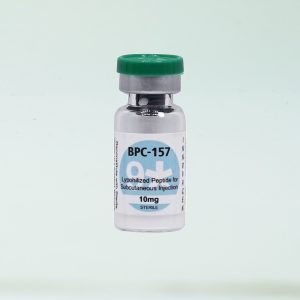
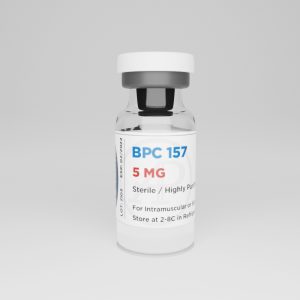
BPC-157 is a synthetic peptide derived from a protective protein found in gastric juice. It accelerates tendon and ligament repair by promoting angiogenesis (new blood vessel formation) at the injury site and upregulating growth factor receptors. Users can inject it subcutaneously near the affected area for targeted healing, or administer it systemically — both approaches have strong anecdotal support. Most protocols run 250-500mcg twice daily for 4-8 weeks. The Innovagen BPC-157 at 10mg offers a higher-dosed vial for extended protocols.
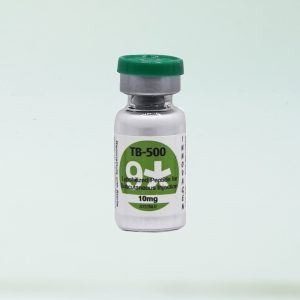
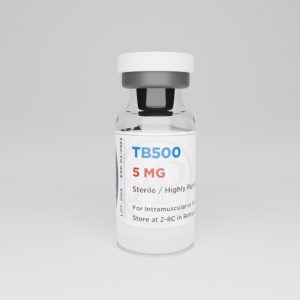
TB-500 takes a different angle. It’s a synthetic fragment of Thymosin Beta-4 that promotes systemic healing — reducing inflammation, improving cellular migration to damaged tissue, and supporting recovery from chronic overuse injuries. Where BPC-157 shines with targeted repair, TB-500 excels at widespread, whole-body recovery. Loading doses of 5-10mg per week for the first 4 weeks, followed by maintenance at 2-5mg per week, is the standard approach. TB-500 from Innovagen is available in a 10mg vial for convenience.
The BPC-157 + TB-500 stack is arguably the most popular healing protocol in the PED world right now. Running both simultaneously targets injury repair from two different mechanisms — BPC handles local tissue regeneration while TB-500 provides the systemic anti-inflammatory and healing support. For chronic joint issues or tendon injuries that haven’t responded to rest alone, this combination is the go-to before considering anything more invasive.
Nandrolone — Decades of Joint Relief
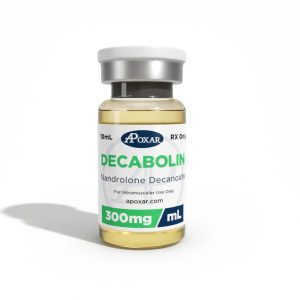
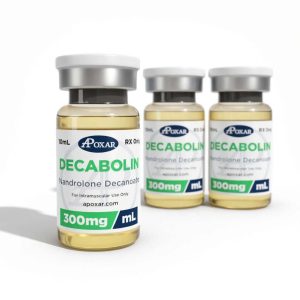
Long before peptides entered the picture, bodybuilders had their own joint support solution: nandrolone. Deca Durabolin (Nandrolone Decanoate) has been used for joint relief since the 1960s, and it remains one of the most effective compounds for this purpose. Nandrolone increases collagen synthesis, boosts synovial fluid production, and provides a cushioning effect that makes heavy training feel noticeably smoother on the joints.
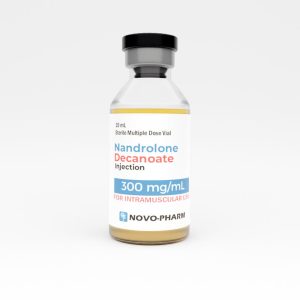
At low “therapeutic” doses of 100-150mg per week, Deca provides significant joint relief without the full anabolic impact of a bulking dose. Many athletes run low-dose Deca alongside their testosterone base specifically for joint support during heavy training blocks. Novo-Pharm’s Deca at 300mg/mL makes dosing precise and easy. The important caveat: nandrolone is suppressive, so it should always be run with a testosterone base.
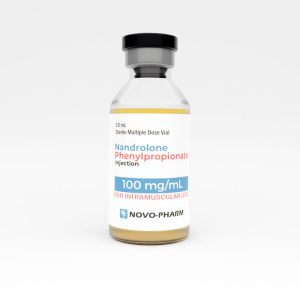
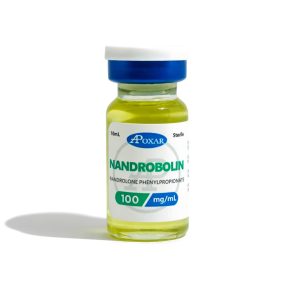
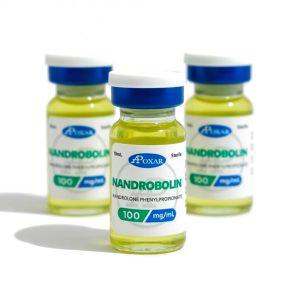
For shorter joint-support runs or when you want faster onset, NPP (Nandrolone Phenylpropionate) delivers the same joint benefits with a shorter ester — quicker in, quicker out. Novo-Pharm’s NPP is another solid option. NPP is particularly useful if you want to test nandrolone’s joint effects without committing to Deca’s long detection and clearance window.
Collagen and Connective Tissue — The Long Game
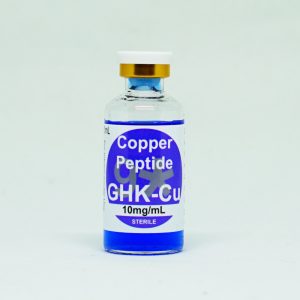
Copper Peptide (GHK-Cu) has emerged as a powerful collagen booster with applications for both joint health and skin quality. GHK-Cu triggers collagen and glycosaminoglycan synthesis, improves tissue remodeling, and accelerates wound healing. It’s increasingly popular in both the PED and dermatology communities. For joint support, it works best as part of a broader protocol alongside BPC-157 or nandrolone rather than as a standalone.
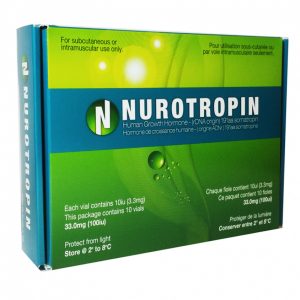
Growth Hormone also plays a significant role in connective tissue health over time. Nurotropin HGH and Somatropin HGH at low doses (2-3 IU/day) improve collagen synthesis and tendon strength over months of use. It’s not a quick fix for acute joint pain, but for long-term connective tissue resilience, HGH is unmatched.
MK-677 (Ibutamoren) offers an oral alternative to injectable GH. By stimulating natural growth hormone secretion, MK-677 improves connective tissue quality over time — and the improved sleep quality it provides is itself beneficial for recovery and repair. Many lifters run MK-677 long-term as a maintenance compound for joint and tissue health.
When to Use Peptides vs. Nandrolone
The choice depends on the nature of your joint issue. For acute tendon or ligament injuries — a partially torn rotator cuff, patellar tendonitis, tennis elbow — healing peptides are the first line of defense. BPC-157 and TB-500 target the actual damage and accelerate repair. They’re not masking anything; they’re fixing it.
For general joint discomfort from years of heavy lifting, arthritis-type symptoms, or the chronic ache that comes with grinding through progressive overload, low-dose nandrolone provides immediate relief by improving lubrication and reducing inflammation in the joint capsule. It doesn’t heal structural damage the way peptides do, but it makes training tolerable while other recovery strategies work.
For serious joint issues, the answer is often both. Run BPC-157 and TB-500 to address the underlying tissue damage while using low-dose Deca for symptomatic relief. Add Growth Hormone if budget allows for long-term connective tissue fortification. Browse the full peptides collection for all available healing compounds.
Frequently Asked Questions
Does Deca really help joints?
Yes, and it’s not placebo. Nandrolone increases collagen synthesis and synovial fluid production in the joint capsule. Even at low doses (100-150mg/week), the relief is noticeable within 3-4 weeks. It won’t repair torn tissue, but it provides genuine lubrication and anti-inflammatory effects that make heavy training significantly more comfortable.
BPC-157 vs. TB-500 — which is better for joint pain?
They serve different functions. BPC-157 excels at targeted local repair — tendons, ligaments, and specific injury sites. TB-500 is better for systemic healing and chronic overuse issues. For most joint problems, running both together provides the best results by addressing repair from two different mechanisms.
How long does BPC-157 take to work?
Most users report noticeable improvement within 1-2 weeks, with significant healing progress by week 4-6. Severe injuries may require 8+ weeks. Injecting near the injury site tends to produce faster results than purely systemic (subcutaneous abdominal) administration.
Can you inject peptides near the injury site?
Yes, and many users prefer this approach for BPC-157 specifically. Subcutaneous injection as close to the affected tendon or joint as possible delivers a higher local concentration of the peptide. It doesn’t need to be intra-articular — subcutaneous nearby is sufficient. TB-500 can be injected anywhere since it works systemically.
What’s the best protocol for chronic joint issues?
A comprehensive approach combines healing peptides (BPC-157 at 250-500mcg twice daily + TB-500 at 5mg/week) for 6-8 weeks to address tissue damage, alongside low-dose nandrolone (100-150mg/week) for immediate relief. Adding Copper Peptide for collagen support and MK-677 for improved GH output rounds out the protocol for long-term joint resilience.
Thousands of Canadian athletes trust Roids101 to buy anabolic steroids in Canada. Lab-tested compounds, discreet packaging, same-day dispatch before noon.